
AI BYTS: Give an ordinary picture a different personality
Two new Google Flow tools invite you to explore rough digital styles and imaginary glass effects.
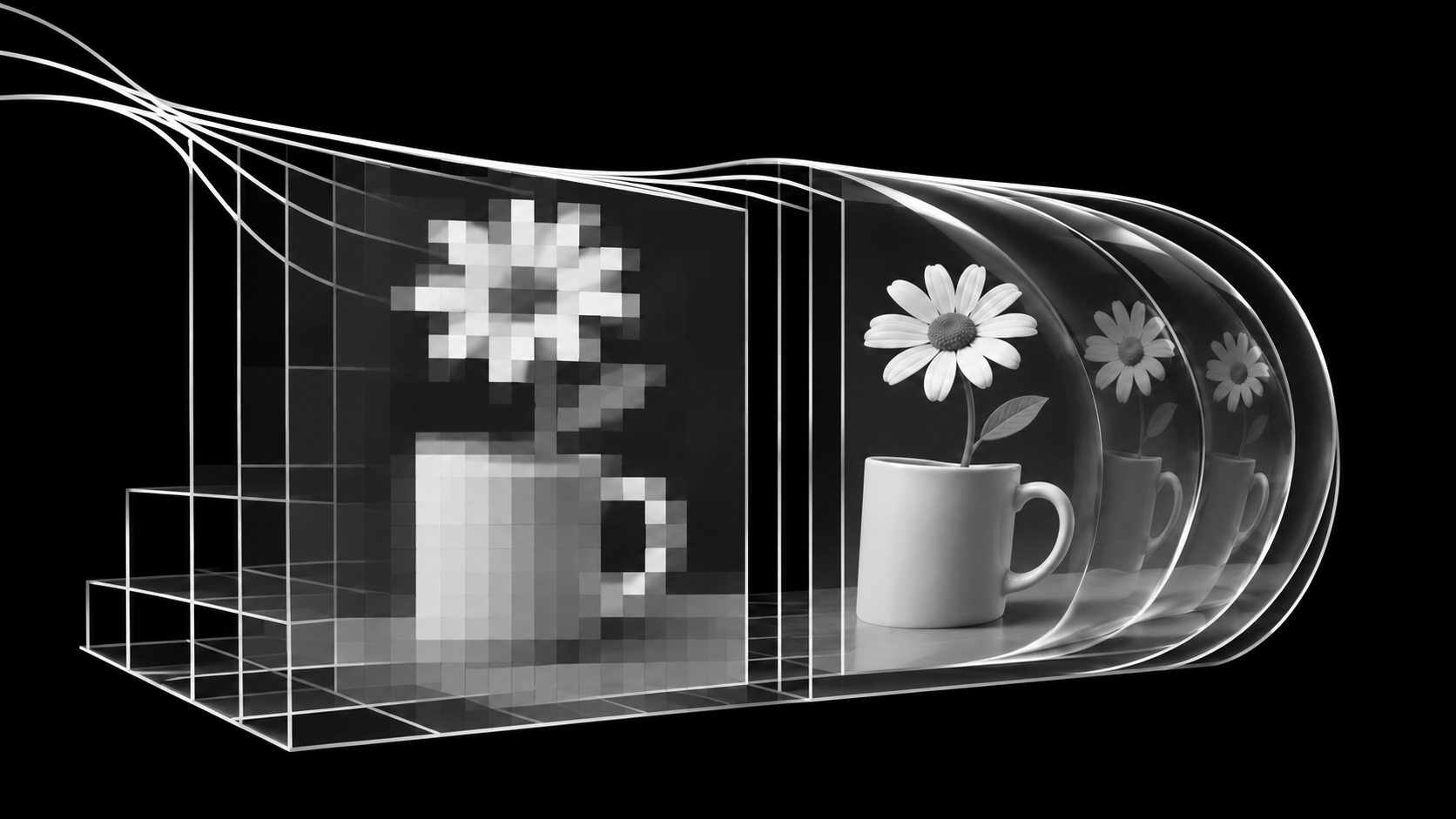
I like an image tool that gives you something specific to play with. Here, the choice is between making a picture look wonderfully digital and giving its light a little license to misbehave.
Give a picture an old-school screen
An ordinary photo can become more interesting when you make it look a little less modern. Google's new Pixel Machine, created by filmmaker Anurag Tiwari, gives images pixel-art, old-screen and glitch treatments. It can also build a picture from text characters. Finally, a reason to ask for fewer pixels.
Here's a small idea to explore: use a photo you own of a mug, a plant or another simple object. Pick one treatment, then compare it with the original. Does the shape still read? Has the rougher surface given it a different personality? You're choosing a look, so the most realistic version doesn't have to win.
Open a project in Google Flow (opens in a new tab), then follow Google's Pixel Machine link (opens in a new tab). The tool was announced November 12 (opens in a new tab).
Documented, not tried here. Flow's prebuilt tools (opens in a new tab) work on web/PC without a paid subscription. You'll need an eligible Google account and must be 18 or older in a supported country (opens in a new tab). Generating media uses credits; check the warning and current charge (opens in a new tab) before running it.
Give a familiar picture an impossible lens
A familiar picture can feel different when the light takes an unexpected turn. Lucid Glass, a new Google Flow tool made by artist Ezra Paulekas, creates glass-like effects such as prisms, halos and refractions—the bending of light. Think of it as an imaginary lens you can put in front of a picture.
I'd start with something simple: a photo you own of a flower beside a window. Explore one glass effect and compare the mood with the original. Does the light draw you toward the flower, or does the effect become the subject? Either could be interesting. Treat it as an imagined effect, not a claim about what a real lens would capture.

Open a project in Google Flow (opens in a new tab), then use Google's Lucid Glass link (opens in a new tab). Google's November 12 announcement (opens in a new tab) shows the idea.
Documented, not tried here. Flow's prebuilt tools (opens in a new tab) work on web/PC without a paid subscription. You'll need an eligible Google account and must be 18 or older in a supported country (opens in a new tab). Generating media uses credits; check the warning and current charge (opens in a new tab) before running it.
