
What actually stops when you stop an AI agent?
New agent-security announcements bring a practical question into focus: whether stopping one tool also stops the work it has passed along.
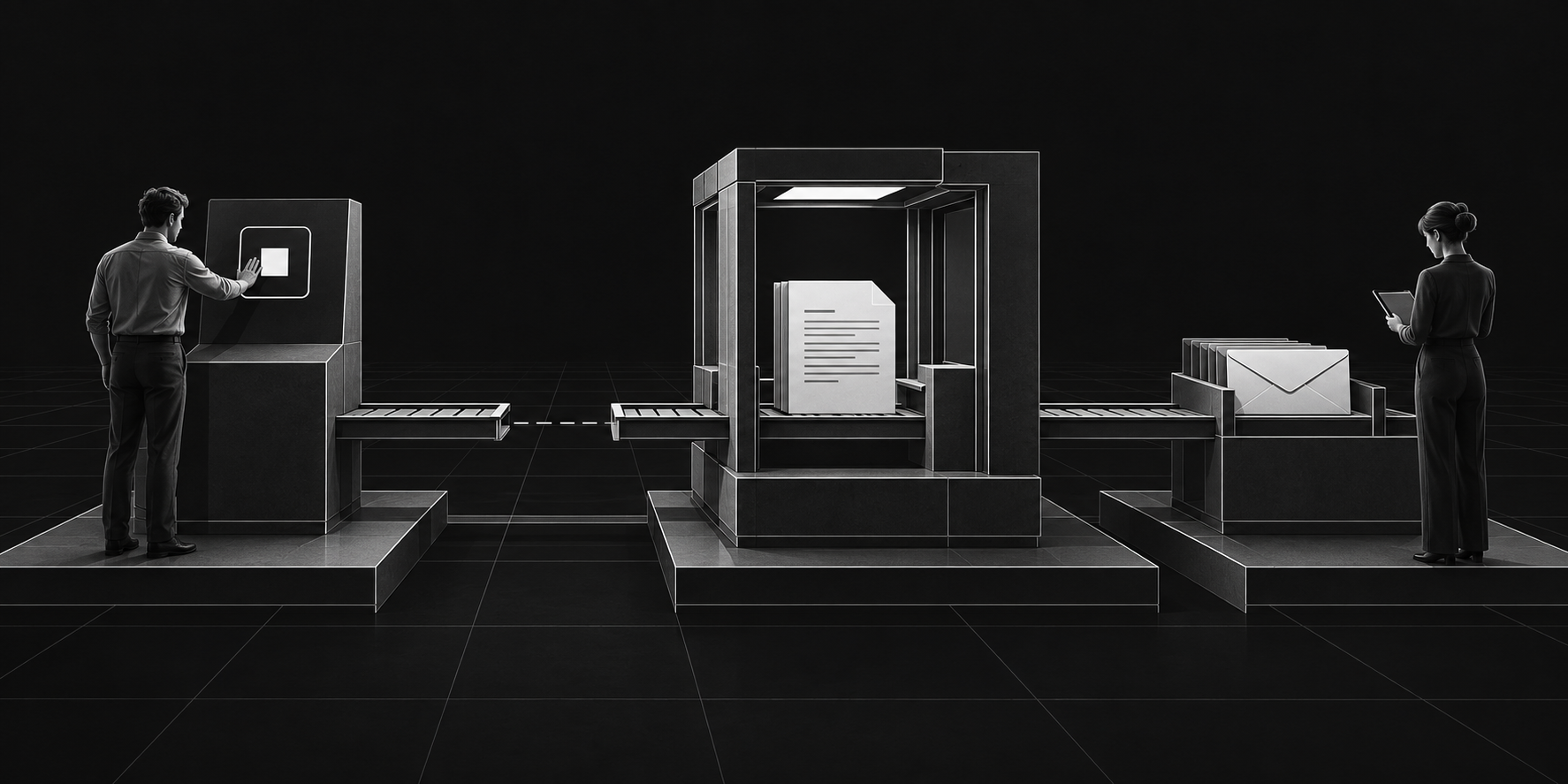
Imagine an AI assistant preparing a customer proposal. It reads a customer record, sends a file to another service for analysis, and queues an email for review. Then someone notices that it used the wrong customer’s information and stops the assistant.
What has actually stopped? The conversation? The analysis running elsewhere? The queued email? And who checks what already happened?
This is a hypothetical example, but it gives this week’s announcements a useful test. An AI agent can take actions through connected tools, making it one part of a much larger operation. The person who starts it may see a single interface while the work crosses several systems.
Weekly Job Intelligence looks at the work organizations are trying to accomplish as AI changes their roles, processes, and responsibilities. For the week ending September 27, the question is what happens when an operation already underway needs to stop.
Two developments, at different stages
On September 22, Okta announced the Blueprint Alliance (opens in a new tab), with members including AWS, Google Cloud, Salesforce, and ServiceNow. Its reference architecture addresses agent identity, access, activity, and response. The alliance calls for traceable delegation, targeted containment, and deliberate recovery after an agent is stopped. Members also commit to developing and testing connections between their security systems.
That is an architecture and a program of work. The announcement does not establish that every participating product already provides a working stop across every connected service.
Microsoft’s September 24 security update (opens in a new tab) describes a narrower control as generally available: Purview and Entra Global Secure Access can enforce data policies on network transfers by people and agents acting on their behalf. Its example is blocking a sensitive document from reaching an unsanctioned AI tool.
Blocking a transfer before it happens is useful. It does not establish that an earlier transfer can be recalled or that a separate queued action will be canceled. A product’s stated control needs to be understood at the point where it operates.
Together, these announcements give me a specific question to take into a system review. When a team says it can stop an agent, which parts of the operation can it demonstrate have stopped? The evidence here is about proposed architecture and stated product capability, rather than measured outcomes across customer organizations.
Follow the work beyond the stop button
Return to the proposal example. Before resuming, the team would need to establish what the assistant read, what left the original system, and whether the email remained in a queue. Each answer may belong to a different person or service.
I would turn those questions into a small, controlled exercise using test data. Start an operation that crosses one real system boundary, interrupt it, and inspect both sides. Look for four things:
- What is still running? Identify work already handed to another service, including retries or scheduled actions.
- What has already changed? Separate a prevented action from a completed action that may need correction.
- Who can intervene? Identify the person able to stop or repair each affected part, including anything outside the initiating team’s control.
- What permits a restart? Check the corrected input and the state of unfinished work before repeating the request.
These are proposed review questions, not a report of a test I have completed. Their value is in replacing an ambiguous “stopped” message with something a team can inspect. In the proposal example, a restart should account for whether the first email is still queued; otherwise the team may be reviewing a second attempt while the first remains active.
This also makes the division of work clearer. Security can help control access. Product and operations need to explain which business actions remain unfinished and what a safe continuation means. The service owner needs evidence of what their part actually did. Those responsibilities have to meet at the same incident.
A useful next demonstration would show an interrupted task, the work remaining in each connected system, and how the team resumes without duplicating or overlooking an action. That would tell me more about operational readiness than another uninterrupted run.
If you have stopped an automated task and found work still continuing elsewhere, which handoff was hardest to trace? That is the kind of detail I’d like to examine in a future issue.
