
Where an AI policy becomes a decision
What happens when an AI agent can access a system but a particular action still needs to stop? Follow a policy into the decision and its evidence.
Updated: October 18, 2026
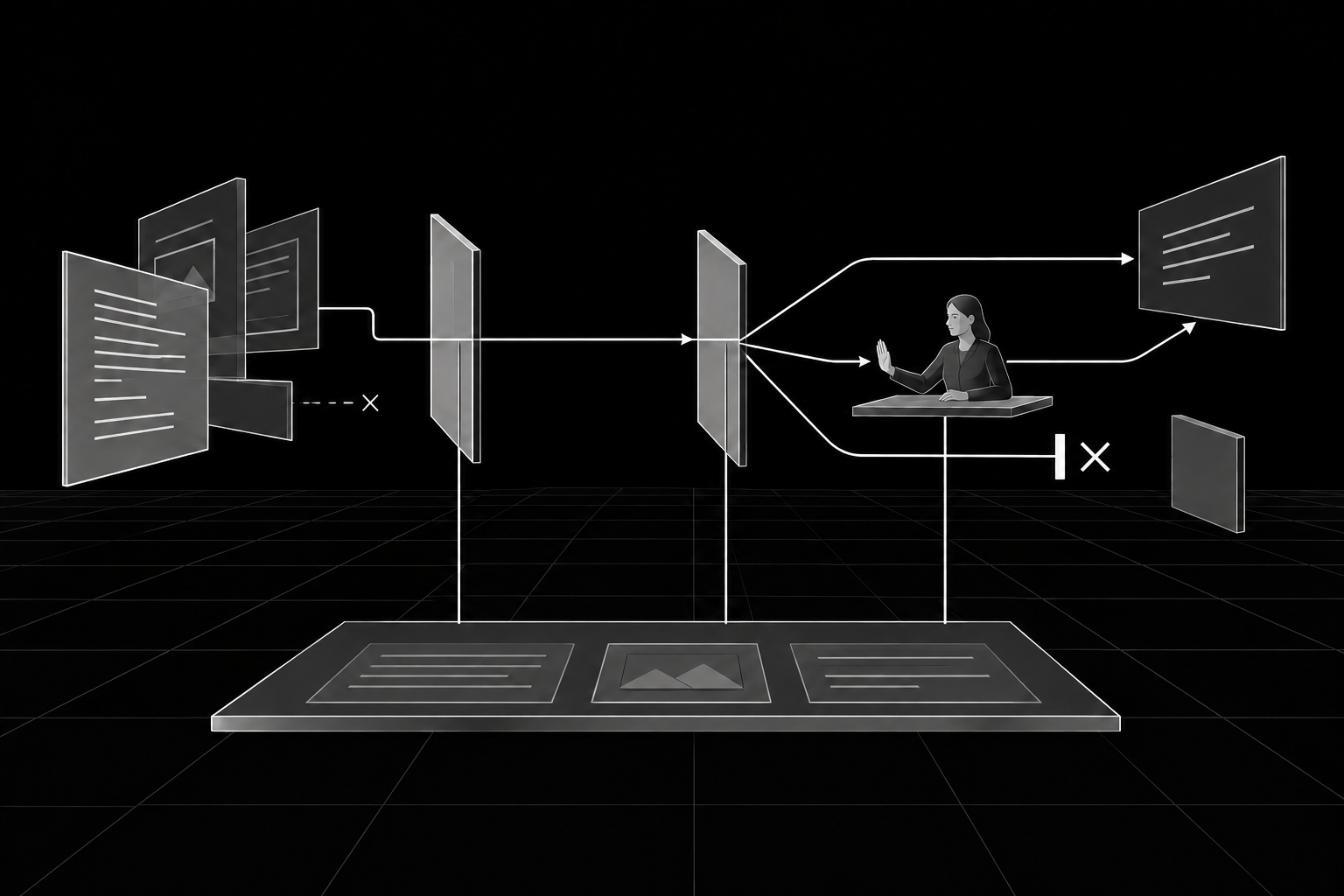
A company says its AI agents must not disclose sensitive customer information. Then an agent tries to send a particular file to a particular tool. Who decides whether that action is allowed?
The policy gives the team an intention. The workflow needs a decision: proceed, stop or bring in a person. It also needs a record of the context used, the person responsible for an exception and what happened after the decision. Without that connection, the policy may read well while the work remains hard to govern.
This issue of Weekly Job Intelligence looks at two product announcements and two product-role postings from the week ending October 4. Together, they show how some organizations are defining the work of putting governance inside products and workflows. They do not establish a broad hiring trend or prove that the products deliver consistent control in use.
Two controls, two different questions
On September 29, OneTrust introduced CORIE (opens in a new tab). The company describes a shared intelligence layer that uses organizational policy and context to decide whether an agent's tool call can proceed, must stop or needs human review. It also describes a separate evidence record.
That is the moment in the opening example: an agent is about to do something. The decision needs the relevant facts, including which agent is acting, the resource it wants and the information involved. OneTrust describes intended product behavior; its announcement does not establish customer deployment or measured risk reduction.
Okta's Resource Access Certifications for AI Agents (opens in a new tab), announced as generally available September 30, addresses a different boundary. It is designed to show which resources an agent can access, assign an owner, route that access for review, revoke it when necessary and retain the review decision and context.
An access review asks whether an agent should retain permission to use a customer system. An action control asks whether this particular file transfer should happen now. An agent can have approved access to a system and still need to stop or seek review before sending a particular file. The useful question is whether the permission, the immediate decision and the evidence connect in the workflow.
What the role postings add
Two employer postings observed for this October 4 reporting week put similar responsibilities inside product work. They are examples of role design, not evidence of a market-wide hiring surge. The original links may no longer display the postings.
G2's August 18 Principal Product Manager, Content posting (opens in a new tab) brought content and research evidence together with provenance, rights, approvals, human control, discovery, testing and commercial outcomes. The point is not that a product manager replaces a policy owner. It is that the product work has to make those controls usable.
Talkdesk's September 23 Forward Deployed AI Product Manager posting (archived listing; unavailable October 22, 2026) combined observing customer workflows with scope review, specification ownership, user acceptance testing, compliance gates, observability and value handoff. That description placed the role near both the work as performed and the point where an AI implementation becomes operational.
The national labor figures give these two examples some proportion. The archived September employment report (opens in a new tab) recorded a 29,000 increase in U.S. payroll employment and a 4.2 percent unemployment rate; July and August gains were revised down by a combined 60,000. The archived August Job Openings and Labor Turnover Survey (opens in a new tab) reported 7.1 million openings, 5.2 million hires and 5.1 million separations, all broadly little changed.
Those figures cannot isolate demand for senior product or consulting roles. The postings offer a narrower observation: these two employers described work at the boundary between policy, product behavior and responsibility, even as the broader labor picture remained restrained.
Trace one action through the work
Choose one consequential action an AI agent might take, such as sending a customer file or updating an account. Follow it through five questions:
- What governs it? Identify the written rule or customer commitment and the facts that matter in this case.
- What can happen? Specify when the action proceeds, stops or needs review.
- Who decides? Name the owner of the resource or exception, with authority to do more than receive a notification.
- How does the route change? Show what happens when the usual rule does not fit or an earlier permission must be revoked.
- What remains? Keep the policy, context, decision, action and eventual outcome together in an inspectable record.
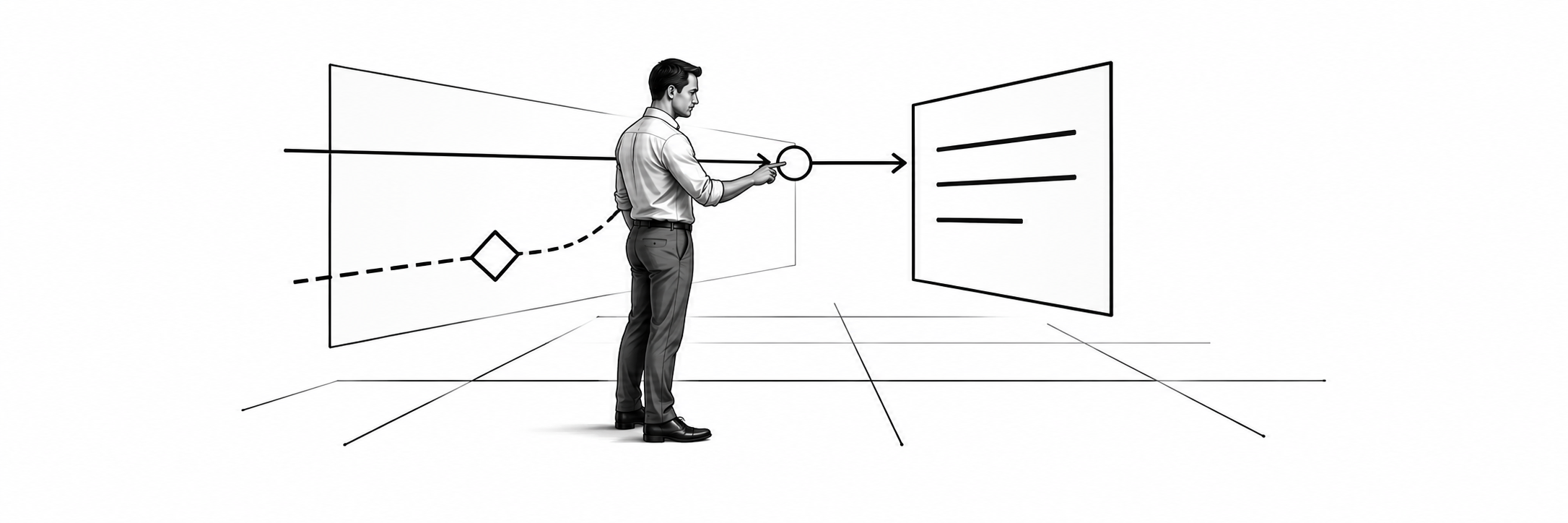
Run that trace for an ordinary case and an exception. The ordinary case should explain why the action proceeded. The exception should show where the system stopped, who took responsibility and what permitted the work to continue. If a connected service acts differently, or the context is wrong, the record should make that visible too.
Five questions cannot guarantee control. They can reveal where a policy statement has not yet become a workable decision. If your team followed one AI-assisted action today, where would the trail end?
