
Show AI what you mean by useful
An example can make your expectations easier to explain. The useful part is knowing what to carry into the next result.

You ask AI to turn a few project notes into an update. The response is tidy, sounds professional, and makes the work seem further along than it is. You wanted someone to see what was finished and what still needed attention. You got a progress announcement.
You could keep adding instructions: less formal, more specific, don't overstate it. If you already have an update that does the job well, you can also show it.
An example makes some of those expectations visible. It gives you something concrete to point to when explaining the structure, level of detail, or treatment you want. Google's prompting guidance describes using examples to guide a model's format, phrasing, and scope. It also treats prompting as an iterative process, so a useful example is a starting point to check, rather than a guarantee. Google's prompt design guidance (opens in a new tab).
Choose an example for the job
Start with the work the result needs to do. A project update might help someone decide whether a page is ready to publish. That calls for a different example from an announcement celebrating the launch.
Choose a sample that makes the important distinction clear. In this case, it should separate completed work from open questions and identify the next action. A beautifully written update that hides the unfinished work would be a poor reference.
You can write a small example yourself if you don't have one. It doesn't need to be impressive. It needs to demonstrate the qualities you want to repeat.
Here is a fictional website example created for this article:
Completed: The contact-page draft is ready for review.
Open: The destination email address hasn't been confirmed. The form has not been tested.
Next: Confirm the address, then test the form before publishing the page.
There isn't much flourish in it. Someone reading it can tell that a drafted page and a working contact form are different stages of the work.
Explain what the example is showing
“Make it like this” leaves an important question open: like it in what way?
You may want the headings and direct language. You may want the way it admits something is unknown. You probably don't want the contact-page details appearing in an update about something else.
Name the qualities you want to carry forward, then provide the new material separately. Using the sample above, a request could look like this:
Turn the new notes below into a project update for the person reviewing the website.
Use the example's Completed, Open, and Next headings. Keep its direct language and level of detail. State exactly which stage is complete; a finished draft does not mean a finished page. State missing information plainly.
Use the new notes for the facts. Don't carry over the example's contact-page details or invent an owner, deadline, or successful test. If a heading has no supporting information, say it isn't provided.
Example:
[Paste the contact-page example here.]
New notes:
Article navigation links have been checked and work. Topic tags are drafted but haven't been reviewed. Nobody has been assigned to review them. Next step is to assign a reviewer and check the tags before applying them to the articles.
This is a newly written prompt to try, not a tested production prompt. Its job is to make the relationship between the sample and the new task explicit.
A suitable result would look like this. This is an authored illustration, not a recorded AI response:
Completed: The article navigation links have been checked and work.
Open: The topic tags are drafted but haven't been reviewed. A reviewer hasn't been assigned.
Next: Assign a reviewer and check the tags before applying them to the articles.
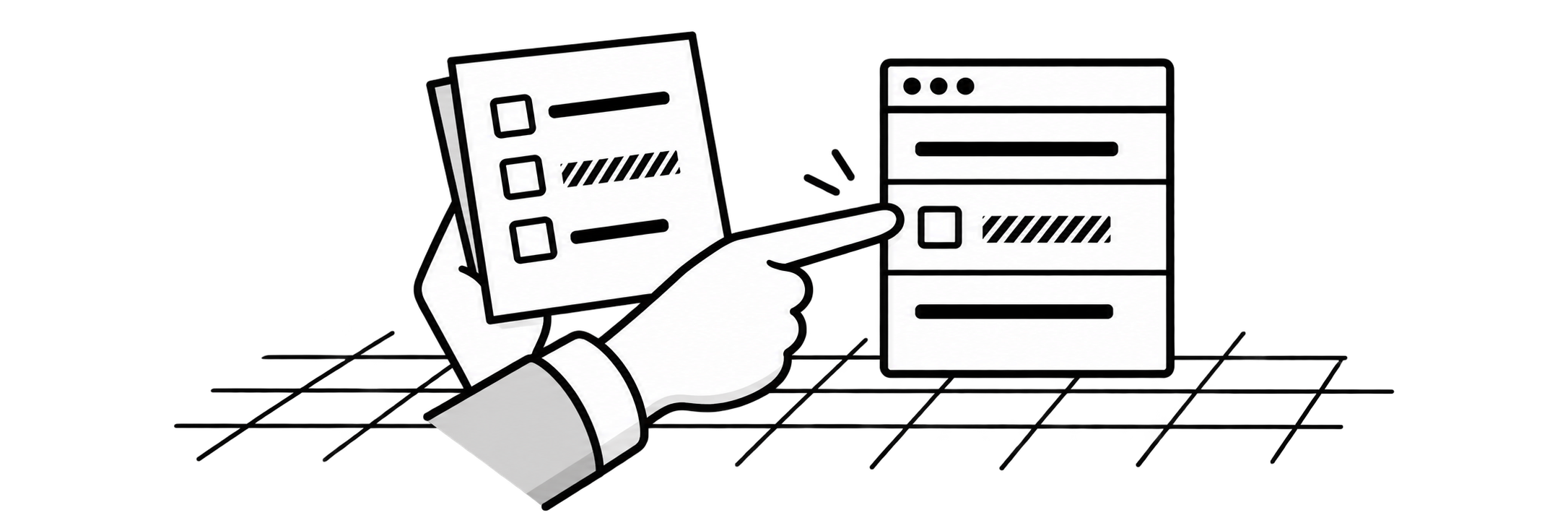
The organization carries across. The facts come from the new notes. The unfinished review remains visible.
Check what carried across
Read the result against the new material before judging how closely it resembles the sample. Did a draft become a completed task? Did an unassigned review acquire a person or a deadline? Did a detail from the contact-page example turn up where it doesn't belong?
Then look at whether the example helped communicate the right thing. A response can use all three headings and still leave the reader unsure what to do next.
If the result misses the point, correct the specific mismatch. “The tags are drafted, but the review hasn't happened. Keep that distinction visible” gives the next attempt a clearer target than “try again.”
One example also has limits. If your updates regularly include blocked work or tasks that have been cancelled, a sample showing only routine progress won't demonstrate how you want those situations handled. Add a relevant example when the distinction matters. Anthropic recommends a curated set of varied examples that portray the expected behavior, rather than an exhaustive collection of special cases. Anthropic's context guidance (opens in a new tab).
For your next recurring task, choose one result you would be comfortable using and write down what makes it useful. Pair it with a different set of inputs and inspect what changes. The useful test is whether the new result serves its reader while staying faithful to the new material.
