
Give a good AI session the harder work
How I choose between a whole-system review, another retry and stepping away.
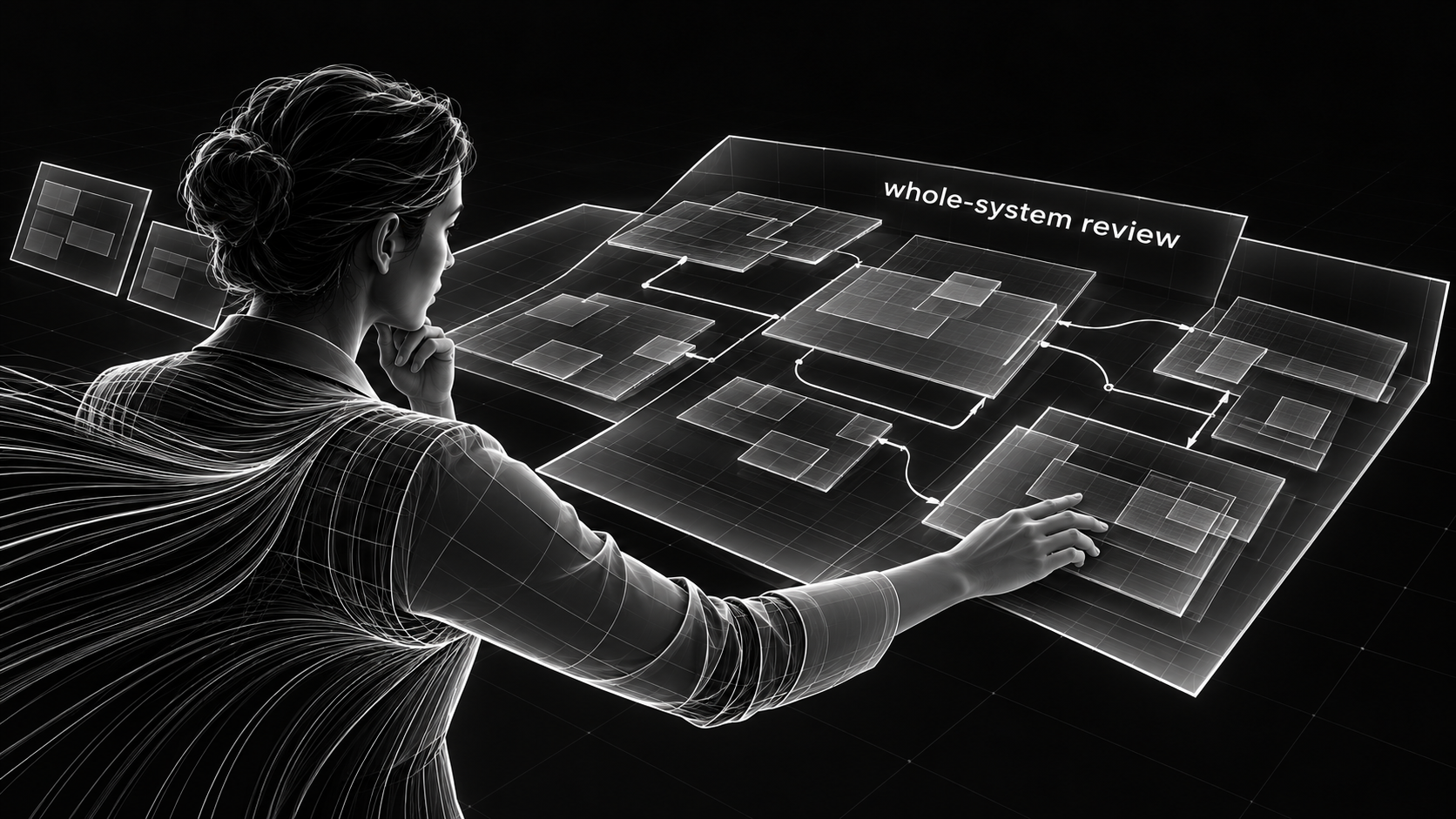
Some AI sessions move so quickly that the difference is obvious. Commands are accepted right away. Work finishes faster than I'm used to. There is no hanging between operations, and I can submit the next prompt when I'm ready.
When that happens, I want to give the system the work that needs it.
I have several connected projects, along with the skills, writing and websites that support them. Keeping up with each piece produces plenty of small tasks. Every so often, I also need to step back and understand what all that work adds up to. A session that's moving well is an opportunity to ask for that larger review.
Give the productive window a substantial question
During a recent review, I wanted to know the current state of the system: which skills we had built, how we were using them, what was deployed, what was working and what needed help.
Those questions cross project boundaries. A writing skill can support more than one publication. A website update can affect links from another property. An article can be approved while its release is still unfinished. To understand the whole, I need to follow those connections and keep their different states clear.
I described that work as “system leveling.” It was roughly the third time I'd asked for a review of that kind. I wanted a clear, actionable account of where things stood, so I could decide what to work on next.
That's the kind of assignment I want to bring forward when the system is responding well. It needs sustained attention from both me and the AI. If each exchange gets interrupted, the review keeps breaking into smaller attempts to get the work moving again.
There is still a review job for me. I need to read what comes back, check whether it answers the question and correct anything that has been misunderstood. A fast session gives me room to do that work. The speed doesn't establish that the account is right.
Recognize when the session has become repair
The other kind of session is just as recognizable. I'll start two or three jobs and notice that all of them are hanging or moving slowly through their progressions. Sometimes the submit button keeps spinning instead of letting me send the next prompt.
At that point, there often isn't much choice. I close ChatGPT entirely, clear the cache in my web browsers and try again. If the spinning and hanging continue, I usually walk away.
That's my retry routine. I haven't established what causes the difference between these sessions or whether clearing the cache resolves a particular problem. I've wondered about internet conditions, and I upgraded my connection, but I can't trace a muddled answer or a lost thread back to bandwidth alone.
What I can recognize is that work has stopped moving usefully. I've had sessions where the information seemed to run together and I kept having to bring the conversation back to what we were doing. Continuing to supply prompts takes attention and tokens, even when it produces very little I can use.
I don't want the whole session to become another attempt to recover the last one.
Keep the urgent work in view
A deadline can limit the choice to leave. If something time-sensitive still has to be done, I focus on that. The larger system review doesn't need to compete with it while several jobs are already struggling.
When there is room to stop, I step away. There are things to do in the real world too.
A good session is a chance to come away with something substantial: a clearer view of the system, the decisions it needs and work I can act on. I want to use that opening while I have it.
