
Turn three objects into a mystery that waits for you
A key, a receipt, and a coffee cup became a branching mystery. The useful twist came when the story wandered and had to be rewound.

Pick three ordinary objects you can see. Then ask AI to turn them into a mystery—but not the whole mystery at once.
The test used a key, a receipt, and a coffee cup. The starting request was:
Use a key, a receipt, and a coffee cup in a short mystery. Give me one scene and two choices at a time. Wait for my choice. Keep the solution hidden until I ask.
The result became a tiny choose-your-own-path story. It also wandered off course, which turned out to be part of the fun.
The first scene offered two ways in
The model opened in an empty station café at 7:55 p.m. A warm coffee cup sat beside a brass key stamped 17. The receipt claimed the coffee had been purchased at 8:03 p.m., eight minutes in the future.
It offered two choices and stopped: inspect the receipt or try the key in locker 17.
The first choice inspected the receipt. A coffee ring revealed the words “when it is warm.” Then the model added a sealed envelope under the receipt.
The envelope was an uninvited fourth object. Out it went.
The correction became part of the game
Instead of restarting, the next turn chose the cup and corrected the current scene:
B. Lift the cup—but correction: keep the mystery centered on the key, receipt, and coffee cup. Remove the envelope, redo this scene, give me exactly two choices, and stop.
The model acknowledged the correction, rewound the scene, and removed the envelope. The warmth of the cup now revealed another line on the thermal receipt: “Return what has already arrived.” It gave two choices and waited again.
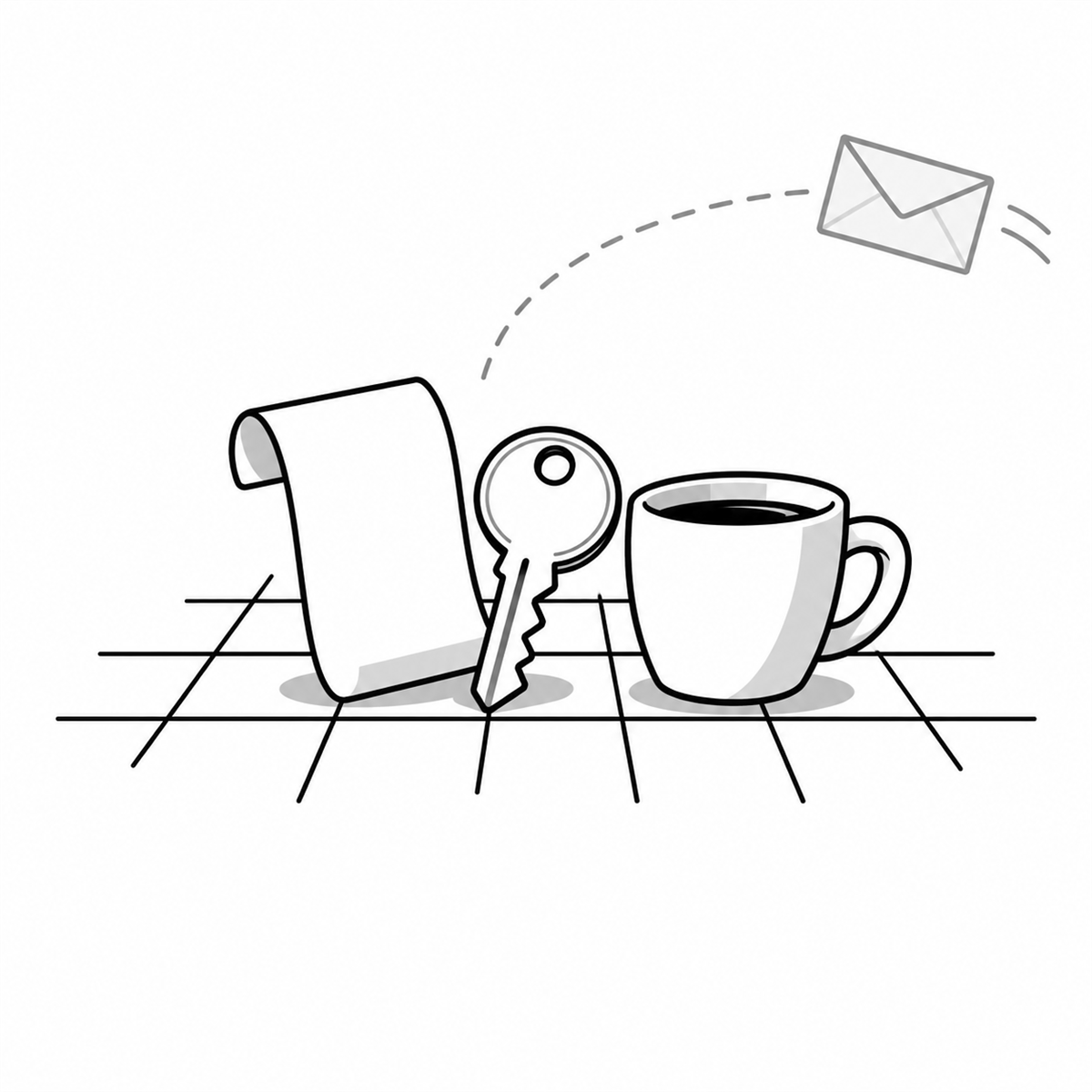
The next choice used the warm cup to reveal more of the receipt. After that, the key opened locker 17. Four choices moved the test from its opening scene to the final solution, which stayed hidden until it was explicitly requested.
The explanation turned the scene into a handoff: the receipt carried a deadline and hidden directions, the key opened the locker, and the warm cup suggested that someone had already retrieved what was there and returned moments earlier.
It was coherent enough for a playful exchange. It was not a uniquely provable logic puzzle, and one run does not show that the prompt will always keep its cadence or clues straight.
Try it with whatever is nearby
Choose three harmless objects with different shapes or uses. A spoon, a library card, and one red sock will give the model more to work with than three nearly identical pens.
Use the starting request above, swapping in your objects. Make one choice at a time. If the story adds too many clues, races ahead, or reveals the solution, correct that specific turn and ask it to redo the scene. You do not have to accept the first version just because the mystery has started.
That may be the best part of this little experiment. The story is not simply delivered to you. You can steer it, notice when it wanders, and bring it back without throwing away everything that was already working.
Access and limits
This experiment needs only an ordinary text conversation. OpenAI's current documentation says ChatGPT is available on the web and mobile, and ordinary text chats are available on the Free tier subject to safeguards and changing model and usage limits. In supported regions, ChatGPT may also be tried without an account.
The exchange described here was tried in a current Codex text-model session, not in the consumer ChatGPT interface or a Free-tier account. No upload, image, voice feature, API key, custom GPT, or separate purchase was used. Your access, model, limits, and result may differ by account and region.
Sources
OpenAI, “What is ChatGPT: FAQ,” checked October 11, 2026 (opens in a new tab)
OpenAI, “ChatGPT Free Tier FAQ,” checked October 11, 2026 (opens in a new tab)
