
ChatGPT and Claude add new ways to work. Which limits still apply?
API credits, a new model and proactive assistants expand what businesses can try. The useful distinction is which account, allowance and connection each route depends on.

A business can gain a new AI capability without gaining more capacity for the workflow it already runs. That distinction matters this week: OpenAI has added a subscription-linked API benefit and another model choice, while both OpenAI and Anthropic are extending how an assistant can reach its user. The opportunity is useful. So is knowing exactly where the extra capability begins and where an existing limit remains.
Our previous reliability report (opens in a new tab) examined interruptions, recoverability and the work a paid subscription actually delivers. This update moves into a related operating decision: when a provider adds another route, what must change in the way a business accounts for and checks the work?
API credits belong to a different account balance
OpenAI's October 28 API credits benefit (opens in a new tab) lets eligible Pro and Business subscribers activate credits for one linked API organization. The paid subscription must have been active for at least seven days. A Pro 200 subscriber's full-period grant is $200, with the initial grant prorated; monthly credits expire at the billing-cycle end. Availability remains subject to eligibility and the enabled country and cohort.
Those credits do not enlarge the allowance used when signed into ChatGPT or Codex. The benefit also excludes Codex usage through API keys. Linking accounts and receiving a grant are separate results, so the receiving organization's billing page is where to confirm the actual amount and expiry. API billing and rate limits remain separate.
That creates room to test a purpose-built application without treating its promotional balance as spare capacity for every existing task. For a business, the useful comparison is the cost of delivering the same acceptable result through each route, including development, review and maintenance. A credit grant can fund a trial; it does not establish that rebuilding a working process around an API will save money.
OpenAI changed its Pro 200 allowance guidance (opens in a new tab) on October 29: the reduction described in our previous issue is canceled. Subscribers who already had the higher Work and Codex allowance keep it; those on the lower allowance receive twice as much to match, with the price still $200 a month. OpenAI also announced doubled Work and Codex allowances for Pro 100 and Pro 500. These subscription changes are separate from the API credit benefit. More allowance does not establish how many acceptable tasks an account can complete.
A new model choice changes the comparison
OpenAI's October 26 release note (opens in a new tab) describes GPT-6.1 Terra rolling out in Work and Codex for eligible paid plans. It names visual reasoning, computer use and writing among its tasks. The model rollout itself did not change overall plan limits, although some Plus and Pro users may see Terra at Medium replace Sol at Light in the default Power presets. Terra does not support UAE inference residency.
A changed preset deserves attention when comparing results over time. If the model and reasoning level changed together, an apparent improvement or regression cannot be attributed to the model alone. A useful local check would repeat a representative task with its source material, required output and acceptance criteria held steady, recording the selected model, effort and usage. This report contains no such comparative test and makes no performance ranking.
Reaching an assistant is different from completing its task
OpenAI's October 28 dot texting announcement (opens in a new tab) starts a beta for Pro users in the United States through iMessage or RCS. It carries the dot's memory and plugins into that conversation and uses a third-party messaging provider, Linq. That is another way to reach the assistant, with its own delivery and service dependencies.
Claude Duet (opens in a new tab), announced October 21, offers a more explicitly proactive workflow: Anthropic says it checks connected accounts periodically and can continue work on a virtual machine while the user's devices are off. The preview starts with a waitlist for US Pro and Max subscribers. It shares the rest of Claude's usage limits; background checks consume that allowance. Anthropic also says it seeks approval before actions such as sending messages or deleting material, and acknowledges that it may misread a thread or urgency.
Neither announcement establishes dependable completion for a particular business. A notification can bring a decision to the owner while a required connection remains unavailable. The task's result still needs to be checked where the work belongs.
Connections can fail while other work continues
Anthropic's Google Calendar connector incident (opens in a new tab) records list and search failures from October 26 to October 28. Its separate Gmail connector incident (opens in a new tab) records search and read errors overnight October 27–28 UTC. Both were marked resolved. The affected products named in those reports do not establish that Duet was affected, or that an individual missed task was recovered.
These are narrower failures than a complete service outage. An assistant may remain available to write, reason or discuss a task while it cannot retrieve the current appointment or message that makes the answer useful. For a calendar-dependent workflow, a response based on older context needs to be distinguishable from a successful fresh calendar read. After restoration, the unfinished task needs its own confirmation.
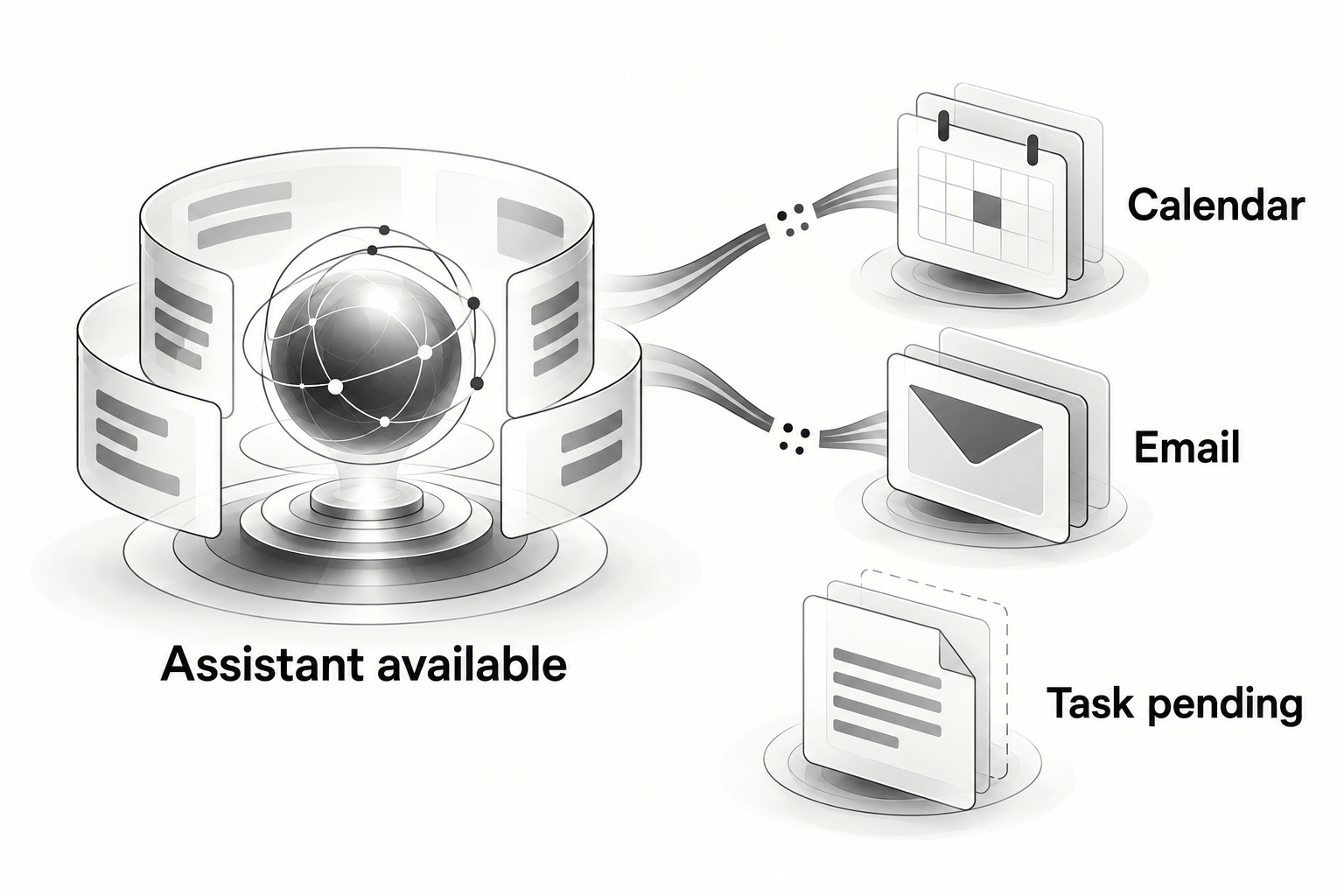
For the next business trial, record three things together: the route used to do the work, the allowance or balance it consumed, and the result saved at the destination. That makes an added feature easier to evaluate. It also makes a failed connection easier to recover without mistaking a reply, a credit balance or a notification for completed work.
