
Case study
Mondelēz: Connecting business goals, content, and user paths
Connecting business goals, content, and user paths through research and experience direction.

Clinton Harman · UX and digital strategy consulting through CGN · 2015
Mondelēz wanted to understand how its digital properties could encourage more engagement. Visitors could reach a page, read its content, and leave without being offered a useful next step.
I led consulting work that connected this question to the content, navigation, and user paths supporting the business's goals. The relationship began with the social team and expanded into a broader regional assignment. I created the strategy documentation and recommendations; Chris Coletta produced the visual design.
Process at a glance
- Review the experience: Examined the corporate site's content, navigation, and onward paths in relation to the client's engagement goals.
- Make recommendations: Identified changes to related content, brand discovery, labels, and page hierarchy that could give visitors useful next steps.
- Develop the strategy: Created a website optimization framework connecting business goals, user actions, content, requirements, and measurement planning.
- Define the regional approach: Set out how discovery, prioritization, information architecture, user flows, wireframes, and annotations could guide subsequent work.
The frameworks described a process for further work; they do not establish that every planned activity was completed. Mondelēz owned implementation and subsequent measurement.
How the engagement expanded
Our initial work was with Mondelēz's social team. Among the concepts we developed was Share the Love, which connected product sampling with social sharing. Chris designed the application concept, and we presented it to the client. It was well received, although CGN did not build or launch the application.
The response to the social work led to an introduction to regional marketing leadership. The regional leader wanted us to review their sites and recommend ways to increase engagement. The corporate-site review, website optimization strategy, and regional UX approach belonged to this broader assignment.
My responsibility was to lead the consulting work and develop the UX strategy. That meant understanding what the client wanted to accomplish, reviewing the experience, and explaining how the available content and digital properties could support those goals.
Finding where the experience stopped
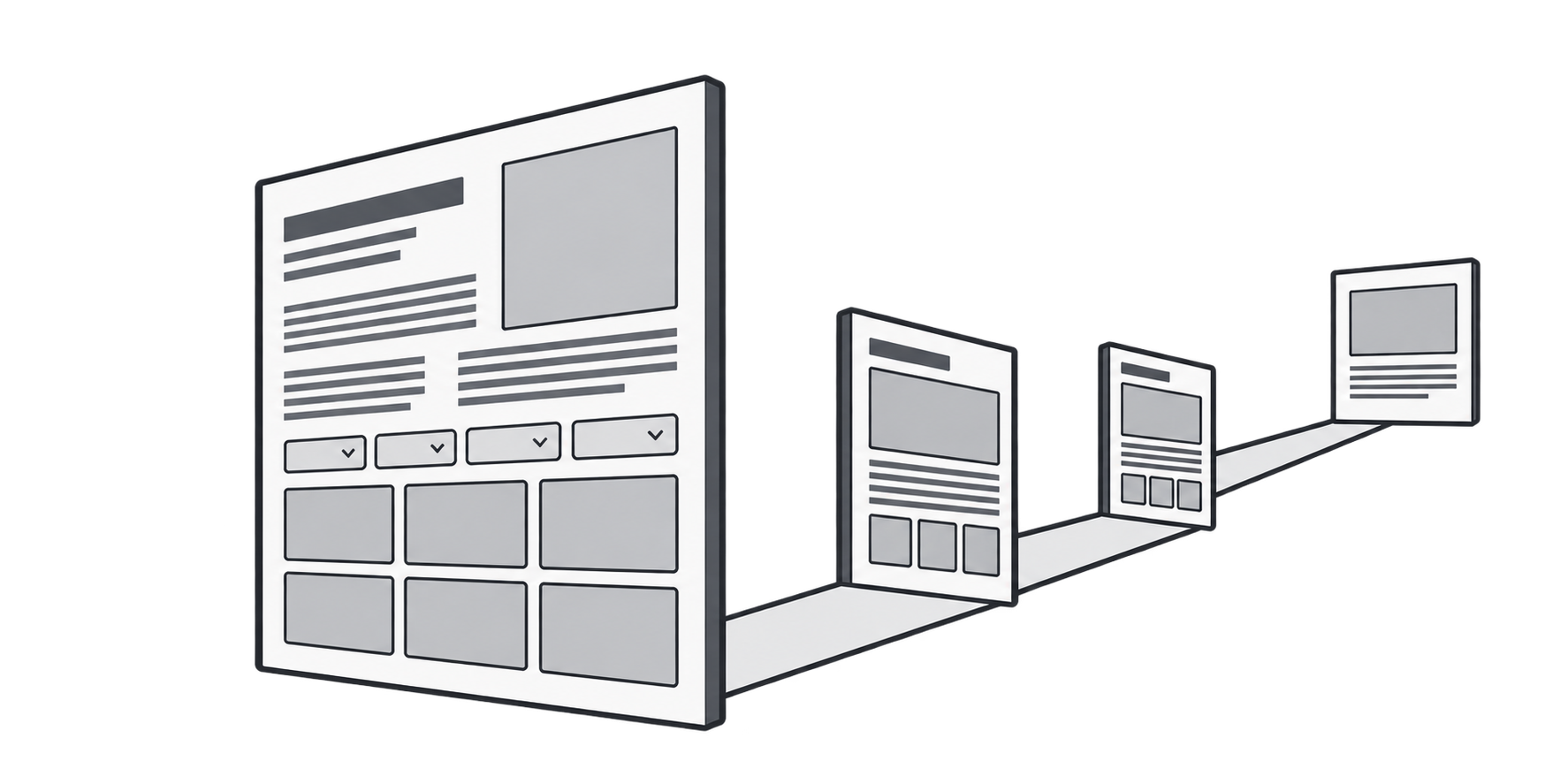
The corporate website provided information about the company and its brands, but there were opportunities to make that information easier to explore. A visitor could finish a page without finding related content or a clear route to a brand site.
I described the direction as continue the experience: give people a relevant next step, guided by what they came to understand and what the business wanted to help them do.
The review translated that direction into specific recommendations:
| Area reviewed | Recommendation and intended purpose |
|---|---|
| Connections between pages | Add opportunities to explore related information and brand sites so the experience could continue beyond the current page. |
| Brand discovery | Move filters above the brand logos to make the controls easier to find and give more brands room on screen. |
| Labels and expectations | Remove the search label from a feature that offered filtering but did not let visitors search. |
| Content and page hierarchy | Use consistent language, clearer titles, and stronger storytelling to help visitors understand where they were and what they could explore. |
These recommendations addressed the relationship between content and navigation. Changing a label clarified what a feature did. Moving a filter changed how people could explore the brands. Adding an onward path gave the content somewhere useful to lead.
Turning the review into a strategy
I developed a website optimization framework that started with business goals and worked toward requirements. It called for stakeholder interviews, translating goals into measurable outcomes, and identifying the sites and other digital properties available to support them.
The next step was to identify the user actions associated with those goals and map the content and paths supporting those actions. A measurement plan would then describe how to monitor, test, and refine the paths.
This gave the recommendations a common structure: the business goal, the action a visitor needed to take, the information and destination supporting that action, and the way its performance could be assessed. Requirements brought those parts together into direction for subsequent work.
Planning the broader regional UX work
The regional assignment also involved organizing information and defining a process for moving from stakeholder needs into design. I developed an approach that connected discovery, requirements, information architecture, user flows, wireframes, and annotations.
The requirements review was designed to bring business, technology, and supplier perspectives together. Proposed work would be considered by risk, effort, and reward: how difficult it would be, how much work it required, and how valuable it was to the organization's goals. Work that did not justify its cost or risk could be removed or moved into a later phase.
The approach also specified reviewing a small set of key-page wireframes before extending the direction across the remaining pages. Requirements would carry through into annotations explaining how the proposed experience should function.
That sequence was intended to let the client review both the scope and the design direction before work extended to the full set of pages.
My contribution and the team's work
I led the consulting initiative, wrote the strategy documentation and recommendations, and did most of the UX work. My work with Chris used wireframes, process descriptions, write-ups, and project briefs to give the visual design a clear foundation.
Chris brought the visual-design expertise. He understood and valued the UX work because it clarified what he needed to design. We had distinct responsibilities and worked together on the client presentations and concepts.
The central consulting outputs were the corporate-site review, the website optimization strategy, and the regional UX approach. Together, they connected specific experience recommendations with a broader process for defining goals, organizing information, prioritizing work, and guiding design.
What followed
Mondelēz accepted the regional work, and several practical website recommendations were implemented, particularly simpler changes. The regional engagement ended after a change in our client contact's role or the organization; I no longer recall the exact circumstances. Our work with the social team continued.
Mondelēz retained responsibility for implementation and subsequent measurement. I don't have the later analytics needed to attribute a change in engagement or conversion to our recommendations.
My contribution was to turn the engagement question into specific experience recommendations and a process for deciding what should happen next. The work connected the content on individual pages to the goals, user paths, and information structures around them.